Editorial / The course · Winter 2026 · Wave 01
Two greens
On a third of Japan's courses, every hole ends twice. Why the country built a second green, and why it keeps it.
Words MidoriPublished · 2 min read
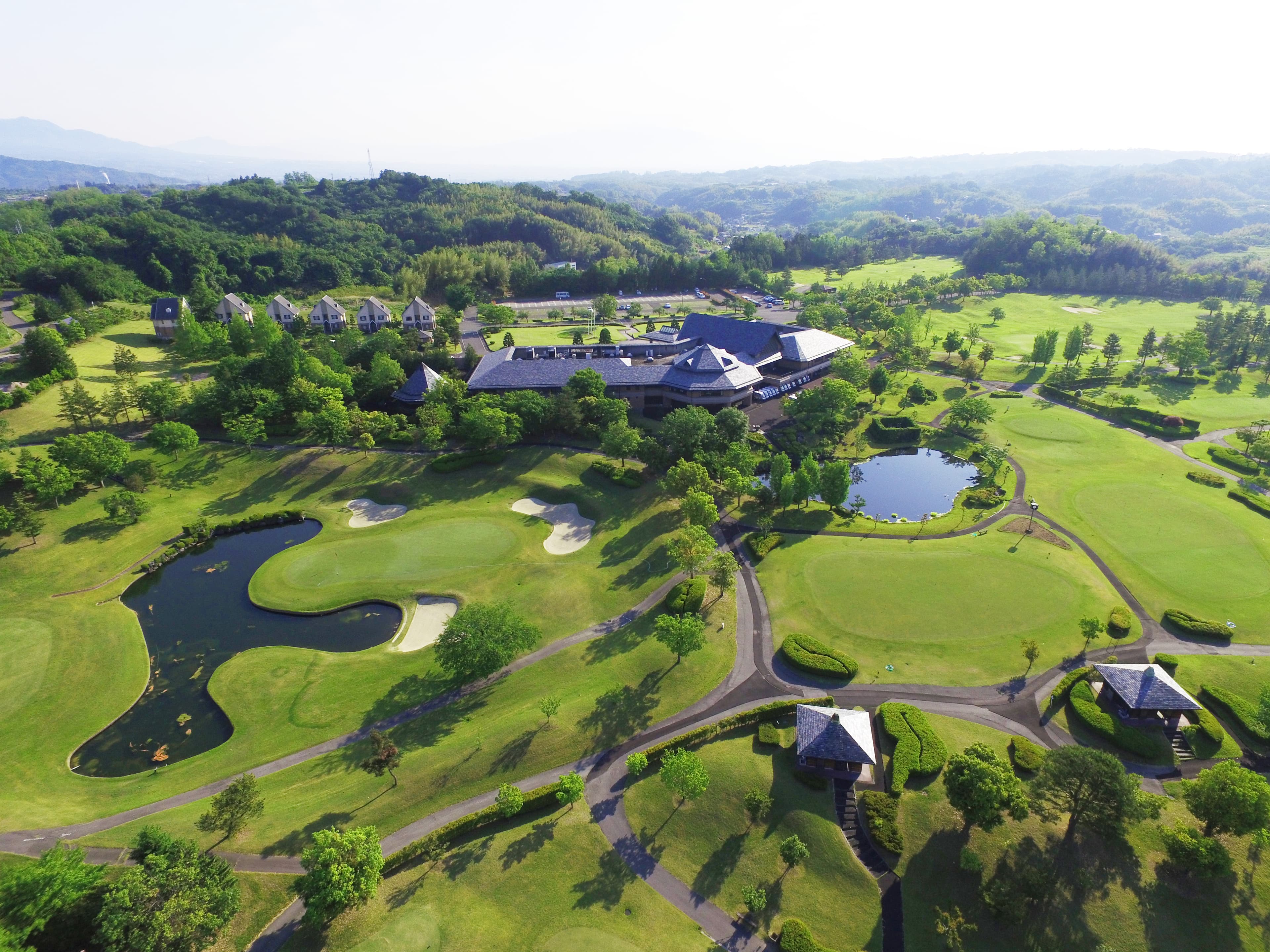
Stand on almost any tee in Japan and look down the hole. Often there are two greens at the end of it, side by side, sometimes a bunker or a swale between them. Only one is in play today. The other rests.
Golf in Japan began in 1901 with four holes on Mount Rokko, above Kobe. The first greens were sand. Around 1930, when Kobe Golf Club turned its greens to grass, the grass of choice was korai, a zoysia that takes the heat and humidity of a Japanese summer. It does not like the cold.
A summer green and a winter green
The answer was a second green on every hole: korai for the warm months, bentgrass for the winter. The architect Seiichi Inoue led much of that work, and it is counted as the start of course renovation in Japan.
At Kasumigaseki, near Tokyo, snow ruined the greens of the East course. The club rebuilt with two greens on each of its 36 holes, one korai, one bent.
“Only one green is in play today. The other rests.”
What the second green does now
Turf science caught up. Bentgrass strains now survive the Japanese summer, and many clubs have gone back to one green per hole. Kasumigaseki did, ahead of the Tokyo Olympics, in a renovation by Tom and Logan Fazio.
The system did not disappear. A survey of 1,176 courses, about half of Japan's, found that 37% still play with two greens. Today both greens are usually bentgrass. The second one is no longer for the season. It lets the greenkeeper rest one green while the other carries the traffic of a busy course.
It also changes the hole. Two greens side by side can sit a club, sometimes two clubs, apart. The yardage on the card is not the yardage of the day. Ask which green is open before you choose a club.